Water Quality
Water Quality Modeling
#INFOSWMM, LID, SWMM5, Water Quality
Treatment in BMP’s and LID’s for SWMM5
Treatment in BMP's and LID's
5.1 Treatment
Excerpt from the EPA manual Storm Water Management Model Reference Manual Volume III – Water Quality (PDF) which can be found here
5.1.1 Background
Management of stormwater quality is usually performed through a combination of so-called “best management practices” (BMPs) and a form … Read the rest
Rossman, SWMM5, Water Quality
… Read the rest
Refactoring the SWMM 5 Help File – Water Quality in SWMM5
Water Quality in SWMM5
| Water Quality Modeling Features |
In addition to modeling the generation and transport of runoff flows, SWMM can also estimate the production of pollutant loads associated with this runoff. The following processes can be modeled for any number of user-defined water quality constituents:
| · | dry-weather pollutant buildup |
ICM, Water Quality
Water Quality and Sediment Parameters in InfoWorks_ICM
Water Quality and Sediment Parameters

The Water Quality Simulation Parameters govern how the engine performs the additional water quality calculations during a simulation.
It is not normally necessary to amend the Water Quality Simulation Parameters. The default values have been chosen for optimum accuracy and performance. However, these parameters can … Read the rest
#INFOSWMM, InfoSWMM_SA, LID, Rossman, Water Quality
Treatment in BMP’s and LID’s for InfoSWMM and SWMM5
Treatment in BMP's and LID's
5.1 Treatment
Excerpt from the EPA manual Storm Water Management Model Reference Manual Volume III – Water Quality (PDF) which can be found here
5.1.1 Background
Management of stormwater quality is usually performed through a combination of so-called “best management practices” (BMPs) and a form … Read the rest
#INFOSEWER, InfoSewer, Water Quality
Hydrogen Sulfide, Corrosion and BOD5 in Innovyze InfoSewer
Hydrogen Sulfide, Corrosion and BOD5 in Innovyze InfoSewer
The control of odorous gases and the corrosion of sewers are the two most important problems in operating wastewater collection systems. Evaluation of existing or potential odor or corrosion problems, and identification of where such problems will occur is, therefore, highly essential. … Read the rest
#INFOSEWER, #INFOSWMM, InfoSWMM, InfoSWMM_SA, Water Quality
Modeling H2S in InfoSWMM
Modeling H2S in InfoSWMM
You can model Sulfide in InfoSWMM using the H2S water quality modeling option which uses BOD5 loading at nodes to estimate the S concentration in the nodes and links of the network using constant network parameters for:
- The Reaction Rate Coefficient,
- The Sulfide Loss Coefficient,
- Sulfide
InfoSWMM, Water Quality
FIPR, ESE Report – Ecological Considerations of Reclaimed Lakes in Central Florida’s Phosphate Region.
03-018-030
Ecological Considerations of Reclaimed Lakes in Central Florida’s Phosphate Region. Volume 2.
Oliver C. Boody et al., Environmental Science & Engineering, Inc. May 1985.
03-018-029
… Read the rest Ecological Considerations of Reclaimed Lakes in Central Florida’s Phosphate Region. Volume 1.
Oliver C. Boody et al., Environmental Science & Engineering, Inc. May 1985.
#INFOSWMM, InfoSWMM, Inside SWMM5, LID, SWMM5, Water Quality
Simple SI Unit Model for SWMM5 LID with 100 mm Rainfall – Part 2
This blog is a companion to the blog post https://swmm5.org/2017/04/17/swmm5-simple-100-mm-rainfall-model-for-lid-modeling-part-1/ in which a 1 Hectare model with 100 mm of rainfall had a simple Bio-Retention Cell with no LID outflows. In part 2 of this blog series we will add a drain coefficient of 10 mm/hr (Figure 1). The internal … Read the rest
#INFOSWMM, InfoSWMM, Inside SWMM5, LID, Sustain, SWMM5, Water Quality
#SWMM5 Simple 100 mm Rainfall model for #LID modeling – Part 1
Simple SI Unit Model for SWMM5 LID with 100 mm Rainfall.
Reading this blog and using the embedded SWMM 5 example file, you will run a simple SI unit model based on factors of 1 and 10.
… Read the restThe LID (Bio-Retention Cell) is designed to have zero outflows, Figure 1,

Water Quality in InfoSewer and H2OMap Sewer
Quality Model
The purpose of the quality model is to simulate pollutant loading and buildup, washoff, as well as individual domestic, commercial and industrial contributions, and transport. Seven different types of quality analyses can be carried out by InfoSewer/Pro and are explained below.
POLLUTANT TRANSPORT
InfoSewer/Pro can effectively simulate the … Read the rest
#INFOSEWER, Force Mains, InfoSewer, InfoSWMM, Water Quality
InfoSewer and H20Map Sewer By Discharge Control for a PUMP
InfoSewer and H20Map Sewer By Discharge Control for a PUMP
InfoSewerH20Map Sewer recognizes two different types of Controls. They are as follows:
· Initial Status - Initial status prescribes the initial setting for a pump InfoSewerH20Map Sewer Project. This control on the element may be over written by the Simple … Read the rest
#INFOSEWER, Force Mains, InfoSewer, InfoSWMM, Water Quality
Stormwater Modelling in InfoSewer and H2OMap Sewer
Stormwater Modelling in InfoSewer and H2OMap Sewer
Steady-state analysis and design of storm sewers is usually accomplished under worst (i.e., peak) runoff conditions to test transporting capacity of the network without causing major flooding or overflows. The Rational method is the most widely used technique for estimation of peak flow … Read the rest
#INFOSEWER, Force Mains, InfoSewer, InfoSWMM, Pumps, Water Quality
InfoSewer and H20Map Sewer Theory for Nodes, Links and Force Mains/Pumps
InfoSewer and H20Map Sewer Theory for Nodes, Links and Force Mains/Pumps
In the past few years, advances in infrastructure management technology have been occurring at an accelerated pace. This technology is now being realized within the context of sanitary and storm sewer modeling. It has allowed sewer collection system modeling … Read the rest
#INFOSEWER, Force Mains, InfoSewer, Pumps, Water Quality
Pumps in InfoSewer and H20Map Sewer
Pumps in InfoSewer and H20Map Sewer
A pump is a link that imparts energy to a fluid thereby raising its hydraulic head. Pumps are needed in a gravity sewer system to prevent deep excavations, and are designed to lift the fluid to a desired level that produces gravity flow condition … Read the rest
#INFOSEWER, Force Mains, InfoSewer, InfoSWMM, Water Quality
Simulation Capabilities in InfoSewer and H2OMap Sewer
Simulation Capabilities in InfoSewer and H2OMap Sewer
InfoSewerH20Map Sewer provides unparalleled network analysis and simulation capabilities for performing a wide range of essential modeling tasks. WithInfoSewerH20Map Sewer, the entire sewer collection system or any selected sub-system may be analyzed under steady state and extended period simulations. Please note the stormwater … Read the rest
#INFOSEWER, Force Mains, InfoSewer, InfoSWMM, Water Quality
Exporting To Sanitary Sewer Conveyance System Models for InfoSewer
Exporting To Sanitary Sewer Conveyance System Models for InfoSewer
InfoSewerH20Map Sewer /Pro can write the contents of a network model created in InfoSewerH20Map Sewer Pro to standard GIS formats (e.g., Shapefiles) for use in other applications.
This will prove useful for sharing your modeling efforts with your organization via enterprise … Read the rest
#INFOSEWER, Force Mains, InfoSewer, InfoSWMM, Water Quality
Manholes in InfoSewer and H2OMap Sewer
Manholes in InfoSewer and H2OMap Sewer
Manholes are points in the network where links join together and where loads enter the network. They are also placed at locations where pipe characteristics change (e.g., diameter and slope). The basic input data required for manholes is:
- The rim elevation , i.e. the
#INFOSEWER, Force Mains, InfoSewer, InfoSWMM, Water Quality
Rules for Routing in InfoSewer and H2OMap Sewer
Rules for  Routing in InfoSewer and H2OMap Sewer
1. Loading Manholes can take unlimited flow
2. Gravity Mains will take all of the flow from the Loading Manholes, but
3. d/D will be 1 and q/Q or q over Qfull will be much greater than 1
4. A Wet Well … Read the rest
#INFOSEWER, Force Mains, InfoSewer, InfoSWMM, Water Quality
InfoSewer, H20Map Sewer EPS Mass Balance
InfoSewer, H20Map Sewer EPS Mass Balance
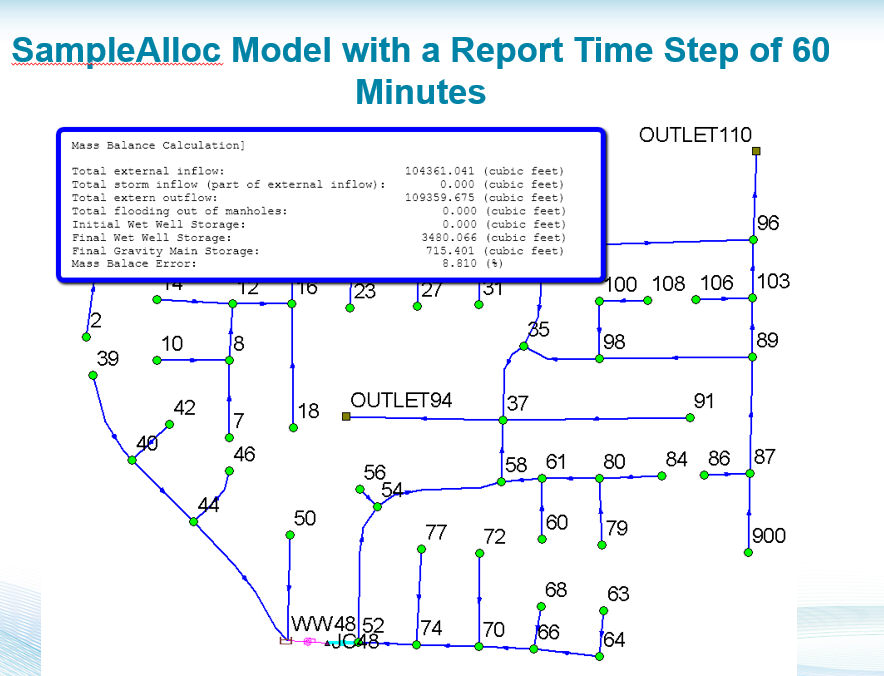
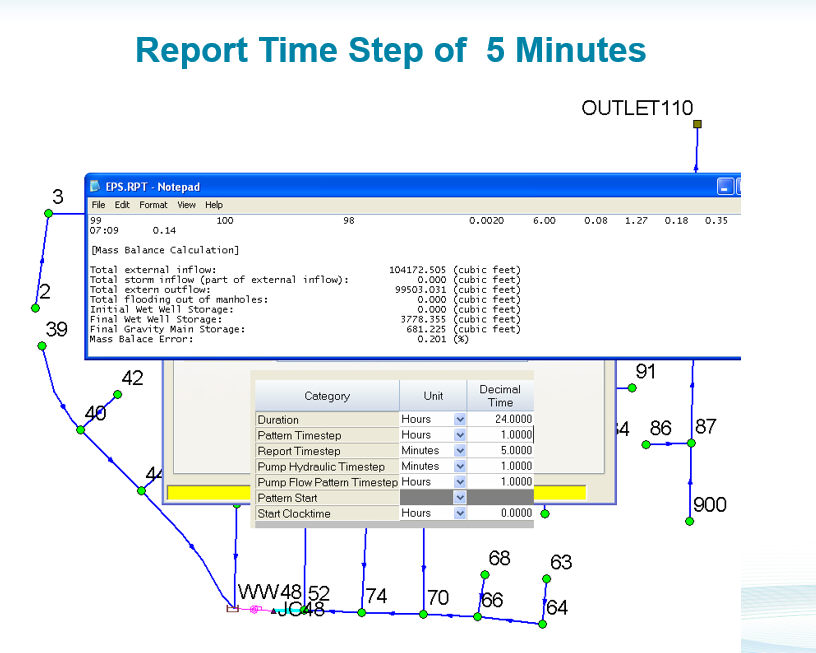
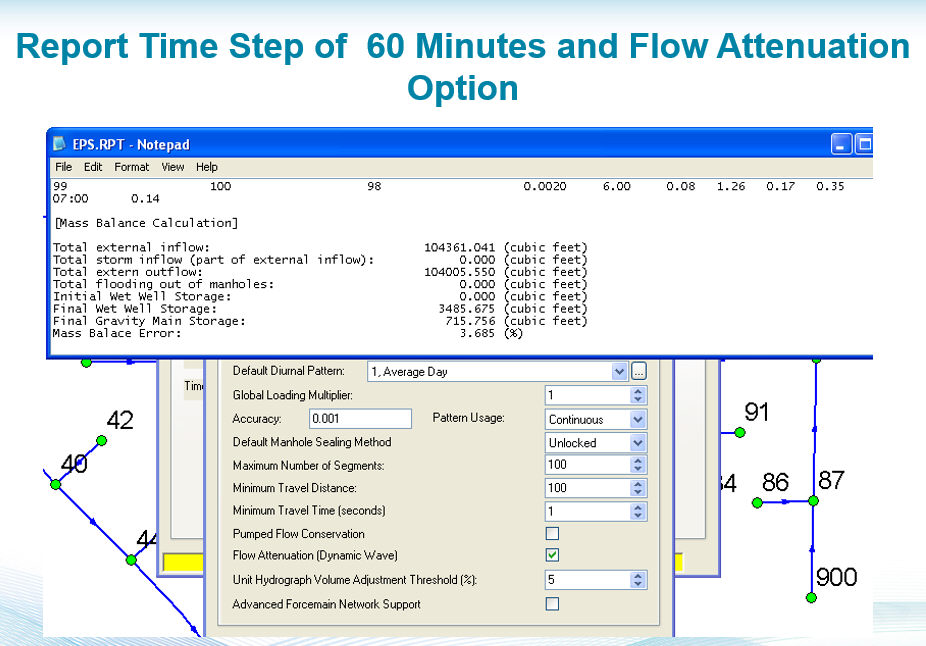
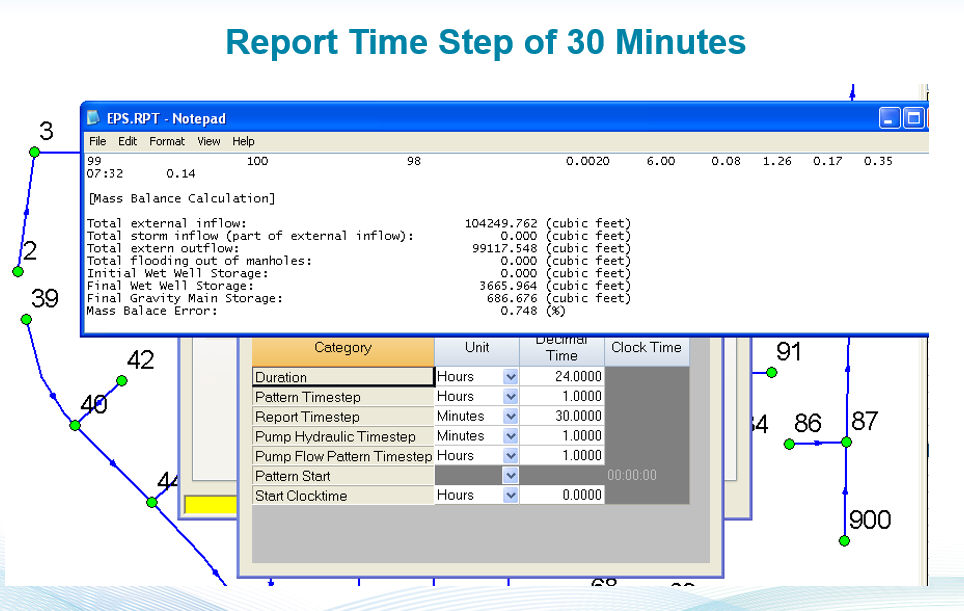
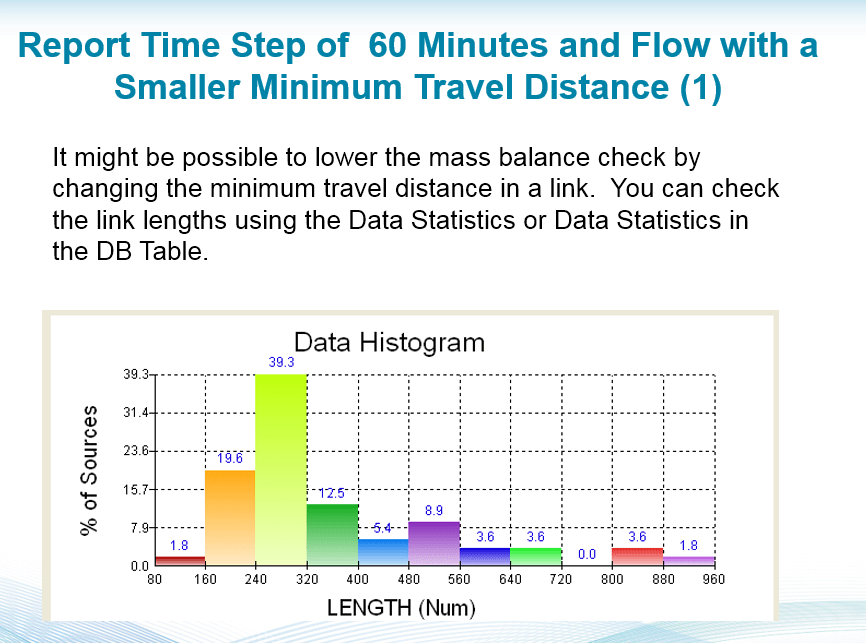
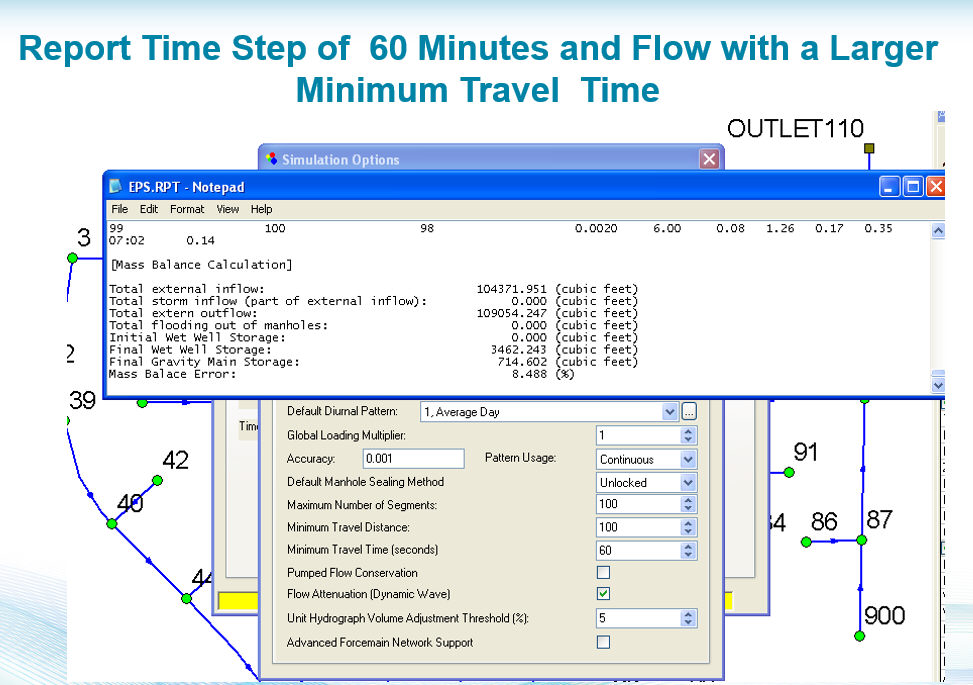
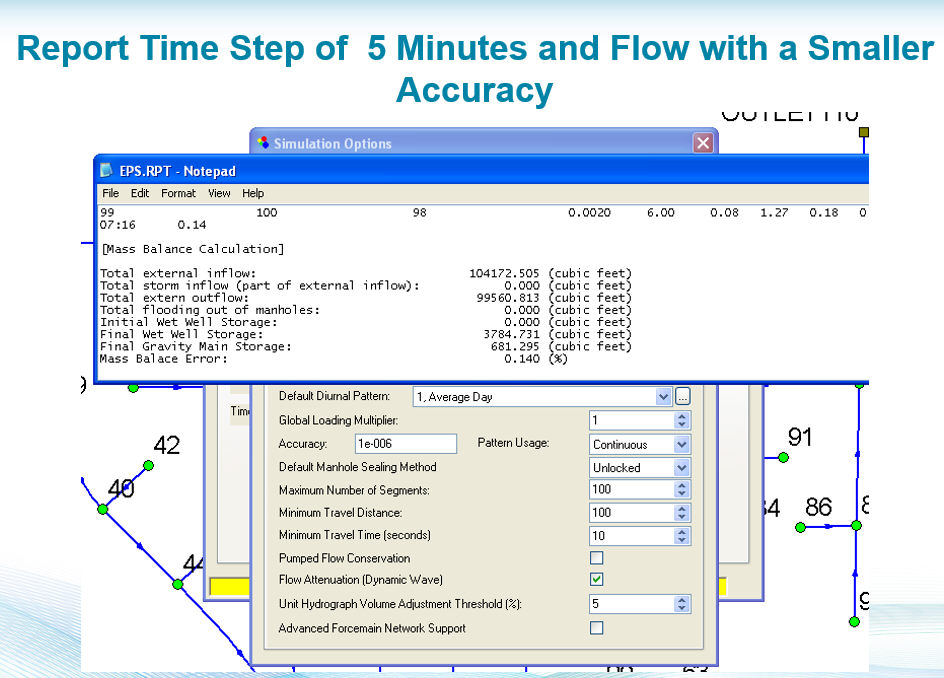
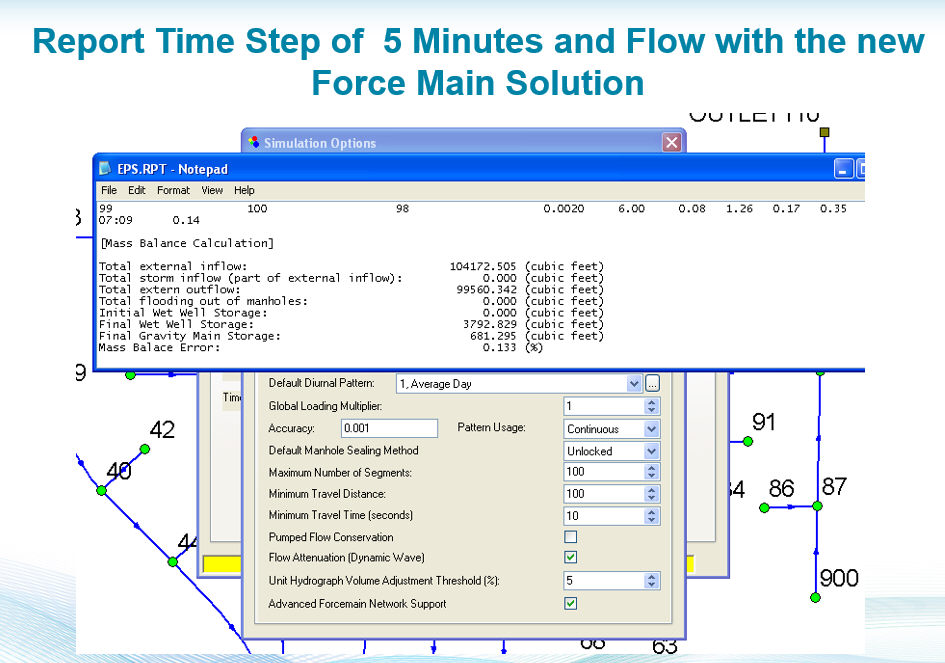
The Extended Period (EPS) simulation has a Mass Balance at the bottom of the Text Output Report